

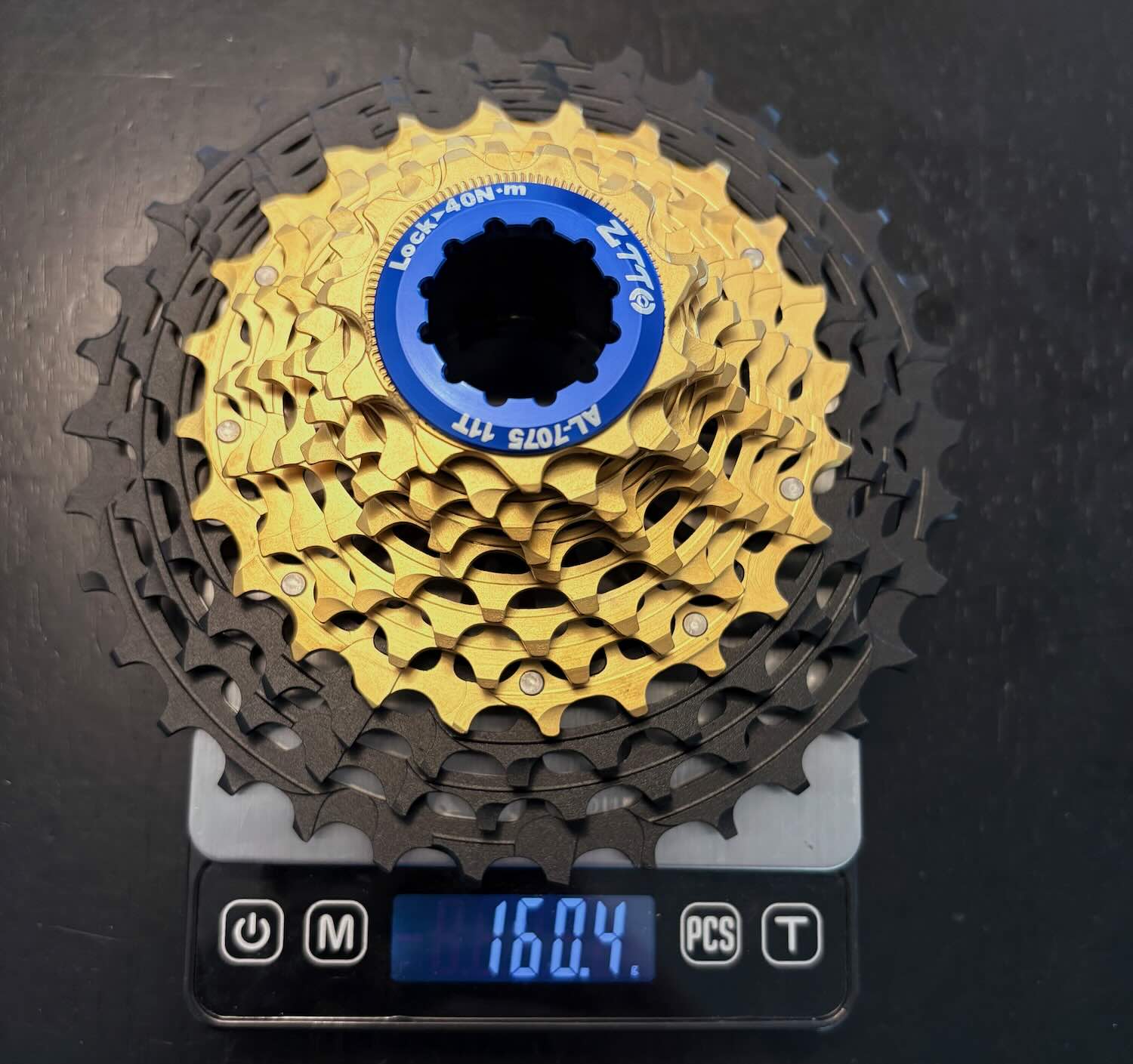
The ZTTO SLR Gen3 is a ridiculously light 12-speed road cassette, around 135g for the 11-30T, at a fraction of what Shimano or SRAM charge for their top-tier options. It shifts well, it’s compatible with standard Shimano HG freehubs, and it looks great. I’ve been through four of them. They all eventually start creaking.
Overview
| ZTTO SLR Gen3 | Shimano Dura-Ace (R9200) | SRAM Red AXS | Shimano Ultegra (R8100) | |
|---|---|---|---|---|
| Weight (11-30T) | ~135g | ~223g | ~215g | ~291g |
| Price (USD) | ~$90 | ~$300 | ~$400 | ~$150 |
| Speeds | 12 | 12 | 12 | 12 |
| Material | 7075 alloy + steel | Ti + steel | Steel | Steel |
Specs
- Speeds: 12
- Ratios: 11-28T, 11-30T, 11-32T, 11-34T, 11-36T
- Weight: ~133g (11-28T), ~135g (11-30T), ~143g (11-32T), ~162g (11-34T)
- Material: 7075-T6 aluminum (3 largest cogs), hardened steel (remaining cogs)
- Freehub: Shimano HG (standard 11-speed road freehub, 36.8mm)
- Construction: CNC machined
Shifting
Shifting is good. The Gen3 tooth profile is better than the earlier versions and reliable under load. I’ve run these with both Dura-Ace Di2 and GRX Di2 and they work well with both. You might need to fiddle with the B-screw more than you would with a Shimano cassette, but once dialed in it shifts well.
The 11-36T ratio requires a GRX (RX825) or 105 Di2 rear derailleur. Dura-Ace and Ultegra top out at 34T. The 11-34T and smaller ratios work fine with any Shimano 12-speed derailleur.
It uses a standard Shimano HG freehub, so you don’t need a new wheel or freehub body to run 12-speed. Same spline as an 11-speed road hub.
The Creaking Problem
I’ve had four of these cassettes across multiple bikes, and every single one develops a creak. It starts around 200-300 miles and gets worse from there. You hear it most in the larger aluminum cogs when you’re putting down power, but eventually it’s there in every gear. Pull the cassette off and nothing looks wrong. It just creaks.
I’ve tried greasing the interfaces, re-torquing the lockring, and swapping lockrings. Nothing permanently fixes it. It’ll go quiet for a ride or two after re-greasing, then come back. I ride in dry Colorado, so it’s not a moisture or mud issue. The hollow construction that saves all that weight is probably why. There’s just enough flex in the cog interfaces for them to move under load.
Shifting still works fine and nothing is going to break. But if you’re the kind of person who can’t ignore a creak, you’ll hate this cassette after a month.
Things to Know
Real-world weights can be a few grams higher than advertised. Weigh yours when it arrives.
They come in a ton of colors but every version ships with the same ugly blue lockring. It’s heavier than a standard Shimano lockring too. Swap it out.
The three largest aluminum cogs will wear faster than steel. If you spend a lot of time in the easiest gears (climbing), expect to replace sooner than you would a full-steel cassette.
I’d be careful with the 11-34T and 11-36T versions. Trace Velo covered a failure where the top two aluminum sprockets sheared off an 11-36T after just 150km of cyclocross. If you look at the back of the larger cassettes, there’s barely any material connecting those top cogs to the carrier. I ran 11-34T and 11-36T without breakage, but I also wasn’t hammering them out of the saddle on a cross course.
Verdict
I’ve put all my bikes back on the Dura-Ace R9200 11-34T. The ZTTO shifts well and the weight is wild for the price, but the creaking starts within a couple hundred miles and nothing permanently fixes it. The aluminum cogs wear faster than steel too, so you’re buying a cassette that gets annoying and wears out.
If you’re chasing every gram for a race day and don’t care about longevity, go for it. For anything else, spend the extra money on Dura-Ace. If you’re shopping lightweight cassettes in general, check out my Sixwheel cassette review too, though that one didn’t work out either.
Disclosure: I purchased this with my own money. I have had no communication with the manufacturer and all thoughts/opinions are my own.

Comments