
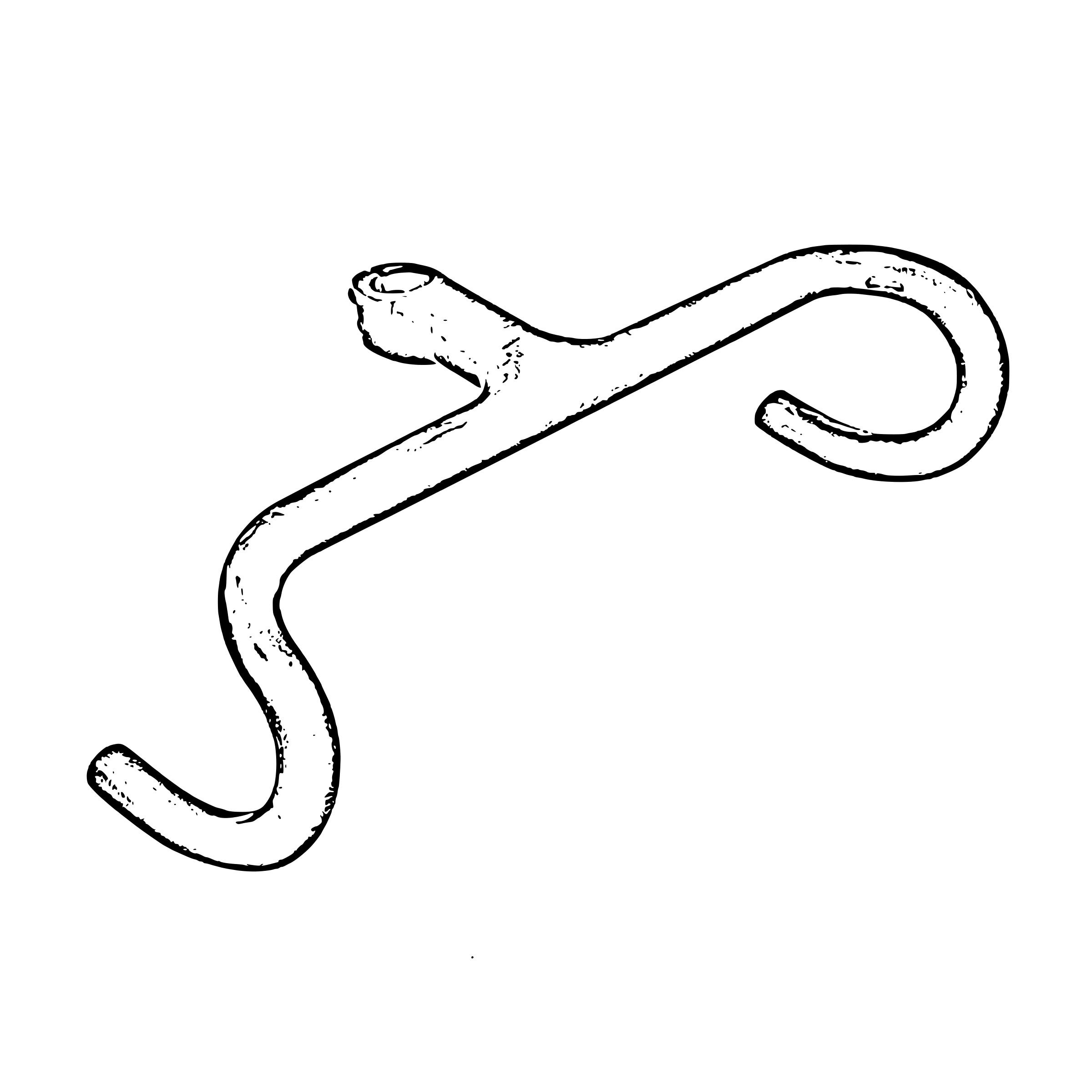
After spending time on the Canary, I decided to try Avian’s lighter option, the Parus. Avian doesn’t make this one anymore. They replaced it with the Parus II, which runs $450 now. The original was $400 when I bought it. It’s a separate model from the Canary, not a revision, and it dropped to around 220g using T1100 carbon and graphene with integrated molding instead of bonding. Weight varied by size, with 7g of that being stem bolts. For $400, that put it among the lightest integrated bars you could buy without spending Darimo money.
Overview
| Avian Parus | Avian Parus II | Avian Canary | Darimo Nexum | Darimo Nexum Drag | Roval Alpinist Cockpit II | Roval Rapide Cockpit | |
|---|---|---|---|---|---|---|---|
| Weight | ~220g | ~210g | ~247g | ~195g | ~245g | 270g | ~310g |
| Price (USD) | $400 | $450 | $270 | ~$900 | ~$950 | $699 | $699 |
| Reach | 70mm | 72mm | 76mm | 77mm | 77mm | 75mm | 75mm |
| Drop | 125mm | 125mm | 125mm | 128mm | 128mm | 125mm | 125mm |
| Stem Angle | -10° | -10° | -10° | -6° | -6° | -6° | -6° |
| Drop Flare | 5° | 5° | 5° | 0° | 0°/6°/16° | 4° | 4° |
Geometry Differences
The Parus has 6mm less reach than the Canary (70mm vs 76mm), so if you’re coming from the Canary you might want to go one size up on stem length to keep the same position. Drop is the same 125mm on both, and they both have 5° of flare in the drops.
Avian marketed the Canary as the comfort bar and the Parus as the race option, though in practice the shorter reach just makes it a more compact cockpit.
Visual Differences
Most of the weight savings come from reshaping the stem area. The Canary is boxier and more squared-off, while the Parus rounds everything out. Round profiles are stronger per gram of material because stress distributes more evenly, so Avian can use less carbon for the same stiffness. Same reason tubes are round and not square. That alone accounts for most of the ~37g difference.
The other thing you’ll notice immediately is the finish. The Canary is painted black to hide imperfections in the carbon layup. The first-gen Parus skipped the paint and went with a clear coat over raw carbon. It saved a couple grams, but the trade-off was you could see surface imperfections, especially in direct sunlight. I think it looks cool in a weight-weenie kind of way, but if you want a clean matte black bar this isn’t it.
Specs
- Reach: 70mm
- Drop: 125mm
- Stem angle: -10°
- Widths: 340, 360, 380, 400mm
- Stem lengths: 80, 90, 100, 110, 120mm
- Fork compatibility: OD1 (28.6mm) and OD2 (31.8mm)
- Rider weight limit: 80kg
- Routing: Mechanical and electronic compatible (external version available, +5g)
- Hardware: Hollowed titanium bolts, carbon computer mount included
- Testing: 400mm drop test (16kg), 200,000-cycle fatigue test
Computer Mount
Don’t use the included mount. Just don’t.
The carbon mount flexes like crazy on rough roads, so good luck reading your screen when it’s bouncing around. The included bolts are heavy for a bar that’s supposed to be about saving grams. And worst of all, the quarter-turn adapter straight up broke on me mid-ride and sent my Wahoo flying. Not great.
Get an aftermarket mount. The two-bolt pattern is standard so you have plenty of options.
Headset Adapter
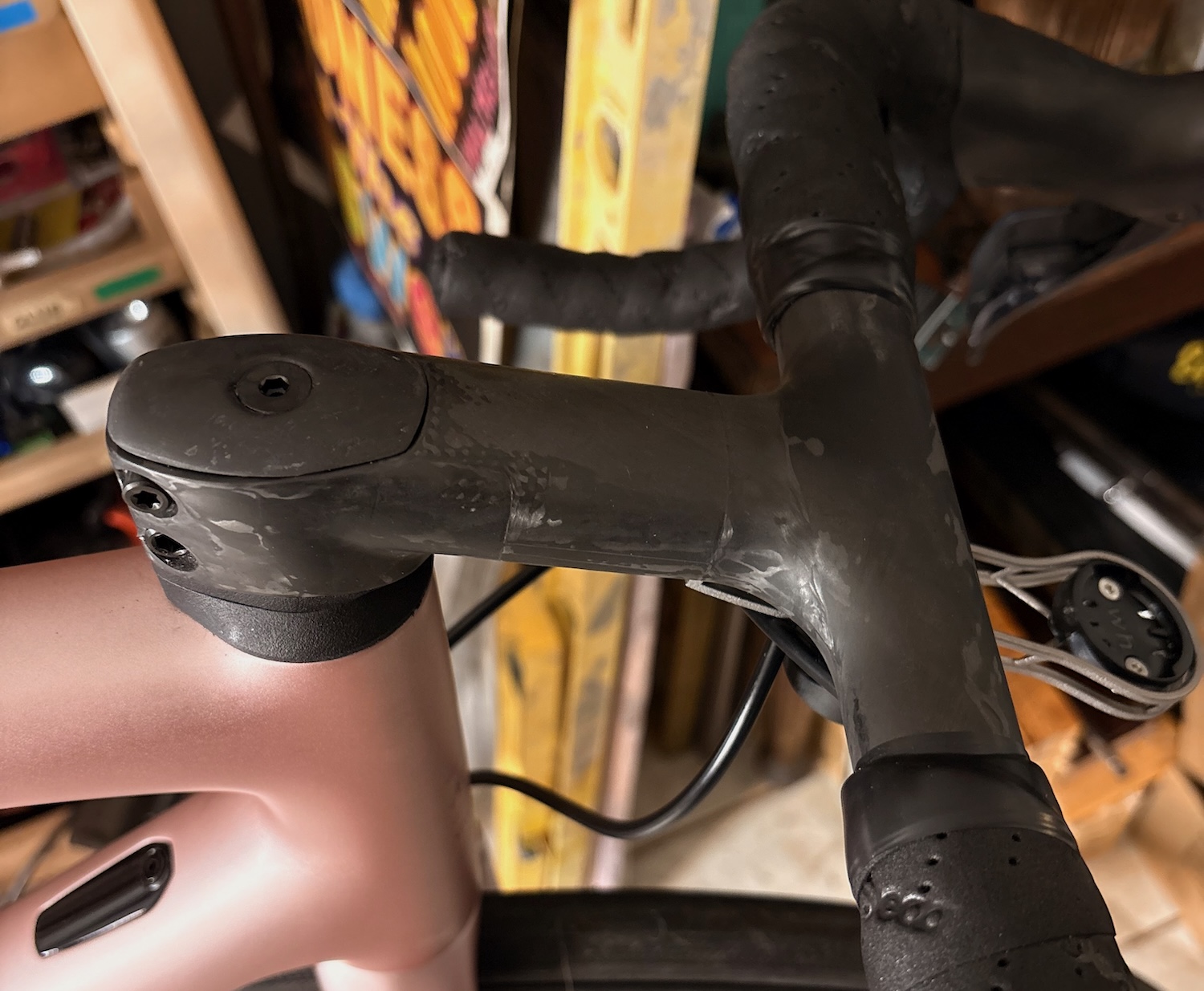
Avian includes a 3D-printed headset adapter/dust cover for your specific frame with the bars. I requested the Aethos version, and while it arrived quickly, the fit wasn’t perfect out of the box. The lip on the front was too tall and rubbed against the frame when moving. The only fix was to sand down the front of the adapter until it had proper headset compression and no longer contacted the frame.
It’s a little disappointing. If you look closely the fit isn’t seamless around the headset, and in theory it could lead to shorter upper bearing life because water and grit can get in easier. But honestly it’s not a big deal in practice. The headset mounting system on the Parus is leagues above what the Canary had, so it’s hard to complain too much.
Things to Know
There are two steerer versions: OD1 (28.6mm / 1-1/8”) and OD2 (31.8mm / 1-1/4”). If you’re not on a Giant, you need OD1. It’s what the vast majority of road bikes use. OD2 is mostly a Giant thing (TCR Advanced Pro/SL, Propel). Worth noting that Scott uses a proprietary 27.2mm steerer on the Addict RC, so neither version will work on that frame without some kind of adapter. Avian molds the OD1 separately rather than shimming down from OD2, which saves ~15g.
Avian also offered a custom order without internal routing for external cables. I’m using mine on an Aethos so I looked into this, but decided against it because it added six weeks to production time.
The 80kg rider weight limit is real. They say “not recommended for sprinters” and I’d take that seriously. This is a weight-first bar.
After 1,000 Miles
The biggest improvement over the Canary is stiffness, especially when sprinting or on the tops. The Canary was noticeably noodly in those situations, and the Parus is noticeably stiffer. There’s still some flex if you stand off the bike and push down on the hoods, but that doesn’t translate to anything I notice while actually riding.
Comfort on long rides is amazing, even better than the Canary. I’ve done multiple centuries on these and the bump absorption is way better than I was expecting. On technical descents the extra stiffness is really noticeable, way more confidence downhill. One thing to watch for is the tops are noticeably thinner than the Canary. I got used to it, but if you have bigger hands you might want to double wrap or add a strip of tape underneath.
The raw carbon finish looks great in person. I picked up a matching Elita One seatpost from AliExpress and the aesthetic works really well together on my Aethos.
Verdict
I had two different Canary bars and the Parus was a clear step up in stiffness and ride feel. For $400 and ~220g, nothing else came close on value. The Parus II is mostly the same bar with an updated carbon layup that drops the claimed weight to 210g. If you’re shopping now that’s what you’ll find at $450. I haven’t ridden it yet, but the original was good enough that I’d be looking at one if I needed another bar.
Disclosure: I purchased this with my own money. I have had no communication with the manufacturer and all thoughts/opinions are my own.
Comments